Our picks of the new skis, boots, bindings, goggles and outerwear for winter 2026/27
In the early autumn of 1975, ski shop owners across Canada were receiving inventory and looking forward to the selling season. None more than Butch Boutry. He had just gone into business and was stocking the shelves of his store in downtown Rossland, B.C., with, among other things, rows of the space-age plastic boots that were eclipsing fibreglass boots in popularity, just as fibreglass had done to leather a decade earlier.
Boutry has seen plenty of such displacements happen over the 52 years he’s run his shop. There’s no counting the number of skis he and his wife Enza have rung up and sold out the door, but now he’s selling the shop itself (enquire within) and is in a reflective mood. He leans against the cash register counter and nods at a wall lined with skis.
“That whole wall used to be race skis,” says Boutry, eyeing racks on which even carving skis are easily outnumbered by freeride and all-mountain skis. Now if you want a race ski he will special order it for you.
“Freeriding has taken over,” says Boutry. He implies that ski designers have made his job of making sure a customer gets on the right ski just a bit simpler. “Skis are made to ski more easily now,” he observes. “Step on it and it turns.”
A run through the next 14 pages will reveal dozens of ways designers continue that process of making the sport easier to do well, and easier to enjoy—whether through ski performance or clothing comfort.
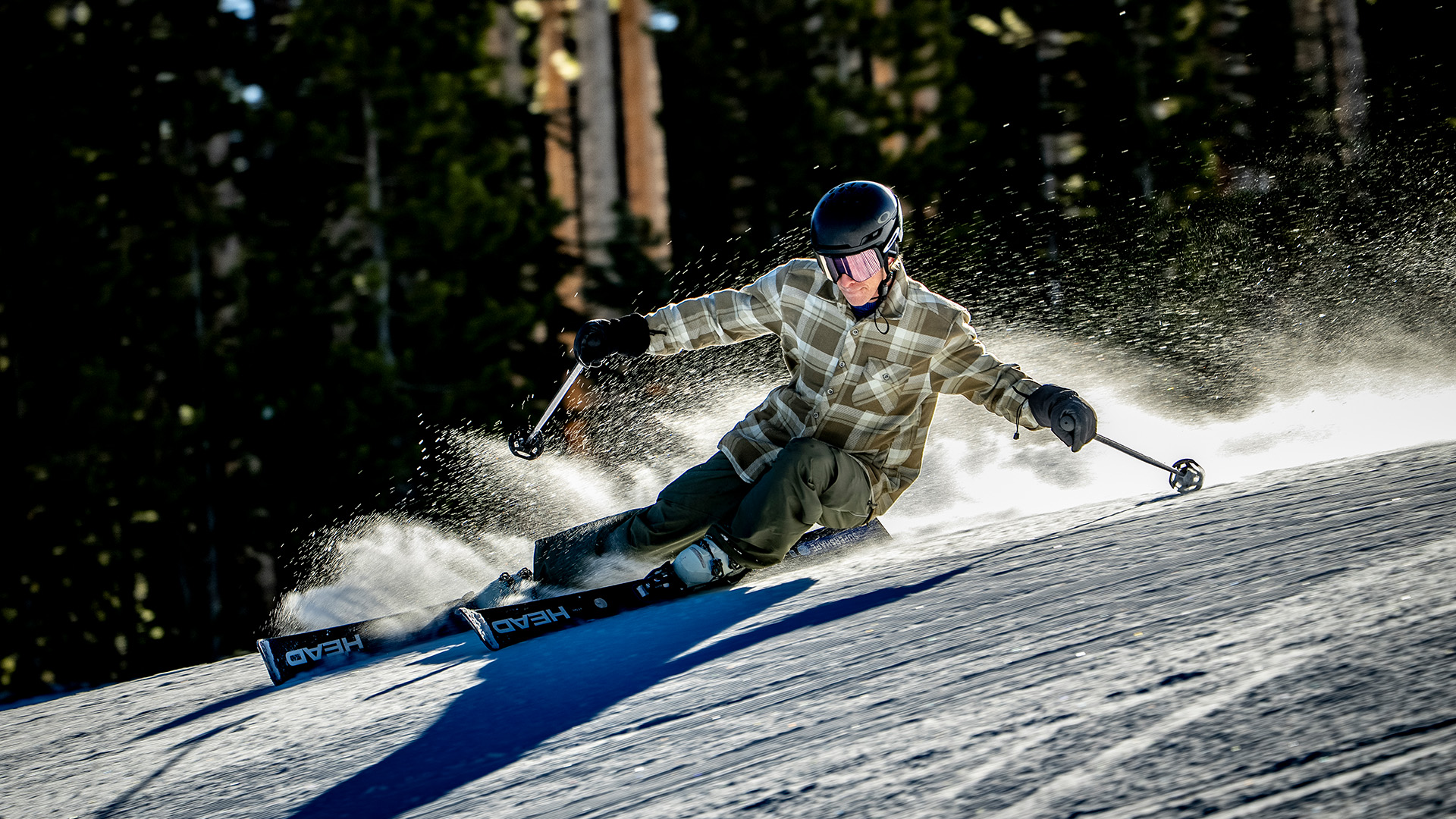
You’ll find ski makers like Head selling skis with auxetic materials that harden when placed under strain, which sounds like exactly what every skier needs to be able to first charge hard and then ease up and cruise on the same pair of planks. Stöckli is on a similar quest but using an S-cut in its aluminum laminate that locks together for torsional stiffness at higher speeds.
These features were not available in 1975 when shops like Boutry’s were still stocking the Rossignol Strato, one of the first fibreglass skis available on the market.
Also not available were goggles that automatically change the tint for you when the sun goes behind a cloud, or boots with portions of the shell missing because designers at Dahu have decided that those portions were just adding unnecessary weight around their waterproof liner. Salomon brings to the market a boot in which the pivot points that attach the upper cuff to the lower boot on either side of your ankle are asymmetrical, with one set low close to the sole of the boot. Counter-intuitive, yes. The way of the future? We will find out (though maybe not soon).
Through all those years of evolution, one thing hasn’t changed, and that’s the reason designers design and shopkeepers keep shop.
“When we open in September they are coming through the door to see what’s new,” says Boutry with a smile. “Even if the blinds are down they walk right in.”
Read on to find out what’s new at a ski shop near you.
Trends
By Lori Knowles
How to Be All That in 2027
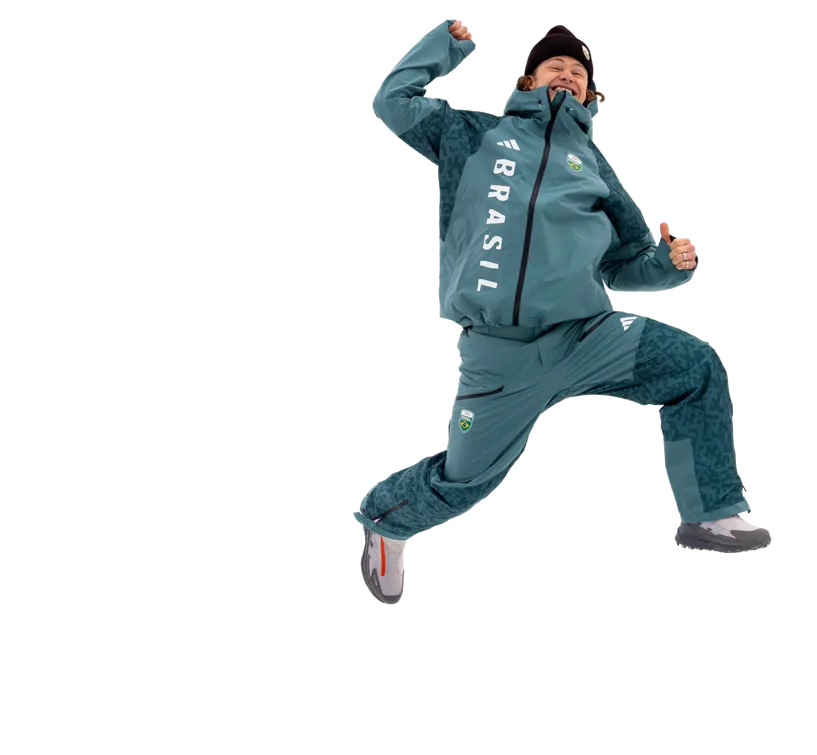
Cozy, comfy and cool—er, cold as your kid would say. This season’s on-slope silhouettes keep it loose: Japanese-inspired baggy pants with tight cuffs; roomy, rounded jackets with cinched waists, warm, bulky, brightly coloured boots. Top it off with a throne hat—a what hat?—for a loftier look. Here’s how to fit in where people are noticing.
Loose Luc
Looking cold yet comfortable in loose fits, Brazilian-skier-turned-Vogue-runway-model Lucas Pinheiro Braathen leapt onto the Olympic podium to accept GS gold, February 2026.
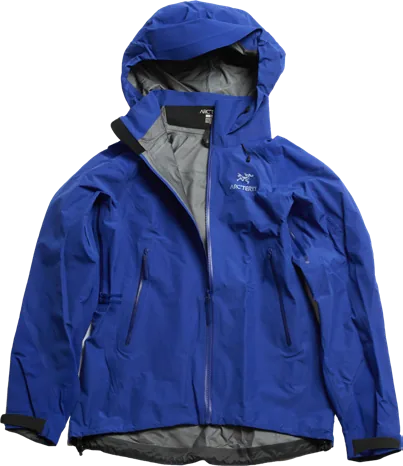
Arc’teryx Beta AR Women’s Jacket
$800 · arcteryx.com
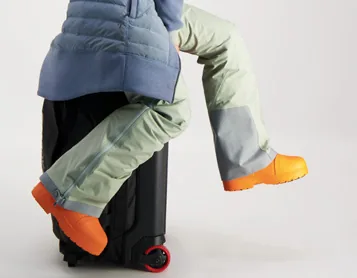
Fubuki Niseko 3.0 Boots
$180 · fubukiboots.com
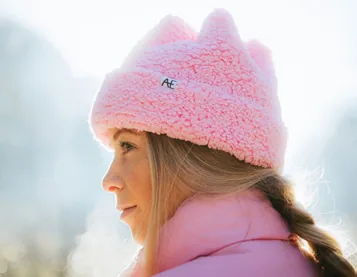
All and Extra Throne Hat
Fleece $48; Sherpa $68 · allandextra.ca
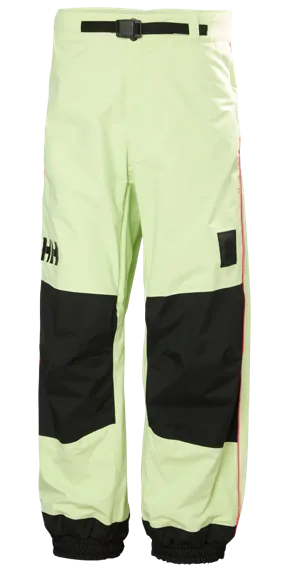
Helly Hansen Ullr D Men’s Pants 2.0
US$280 · hellyhansen.com
Skis
Two trends dominate this year’s new skis. One is loose and surfy freeride skis that can also carve like an all-mountain ski (Blizzard Canvas, K2 MindBender and Armada Antimatter). The second trend is narrower all-mountain skis that rip groomers (Atomic Redster Q and Cloud Q, Icelantic Tempest and Torrent, Head Discovery). In a word, versatility. We get deeper into the performance of many of these new skis in the reviews from our ski test. Below are previews of the most noteworthy new ski families for winter 2026/27.

Flexible Flex
Original+ does ski shopping a little differently. Most brands force you to choose performance by model and length. Original+ lets the skier pick the shape of ski they want and then the flex of said ski. It’s a nuanced difference, but important. Take the brand’s Select 6X model, one of five models available. It’s an ash wood, Titanal and fibreglass ski with an elliptical sidecut, GS turn radius and 69mm waist. Whether that means hard charger, mellow cruiser or something in between is up to the shopper. They can choose between soft, medium and stiff flex. Original+ adjusts the thickness of the core materials accordingly. Flexfitting, as the company calls it, isn’t quite customization, but it does allow skiers to find the ski shape they want without having to compromise on stiffness, or vice versa. Regardless, the Select 6X is an intuitive ski, easily transitioning between turn shapes, holding an edge with confidence and with enough playfulness to stray into the bumps.

Straight from the Lab
Armada picked a fitting name for its new metal-laminate, freeride skis: Physicists struggle to create antimatter and the Antimatter ski brings an equally rare combination of traits to snow. It combines a poplar wood core with a sheet of Titanal, a nearly twintip rocker profile and a directional shape. It’s loose and poppy, like we expect from Armada skis, but with the addition of metal it also provides a predictable and powerful platform for carving and charging. The Antimatter family comes in a wide range of widths, from a 75mm carver to a 114mm freeride weapon. All come in supposed women’s and unisex topsheet designs.

Two Dancers Are Better Than One
On demo day this is one song you won’t want to sit out. Faction is doubling down with a refresh of the all-mountain Dancer family, including splitting it in two. The original Dancer had two thin sheets of Titanal sandwiched around a poplar wood core. The Dancer TI series keeps the same construction and adds two new shapes, the Dancer 89 TI and 99 TI. The new series is the Dancer (sans TI), which is metal-free and comes in three widths, 79, 89 and 99. Both series share a lot of similarities: a little bit of rocker, elliptical sidecut for easy turn shape adjustments and clean graphics.
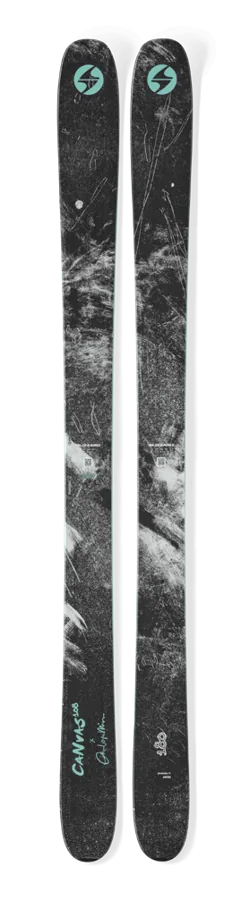
Freeride with Blizzard Characteristics
Blizzard is best known for making traditional-skiing skis. Whether carvers or freeride skis, they tend to prefer to carve and ski forwards, not slash and slide switch, which makes the Canvas a rebrand. To develop something built for modern and progressive big-mountain skiing, the Austrian ski house tapped its young, sponsored freeride skiers for direction. The result is a twintip with Blizzard characteristics. The twintip Canvas comes in three widths (100, 108 and 118). All are metal-free with a poplar and paulownia wood core and camber underfoot. Blizzard fans finally have an option for getting loose.
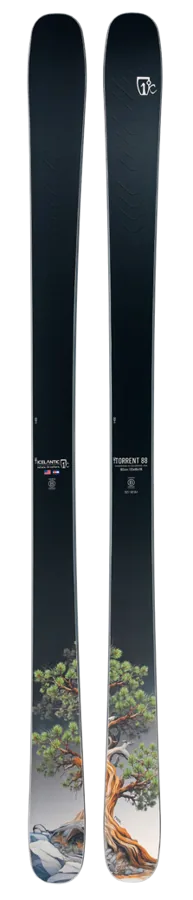
Taming the Trouble
Icelantic designed its new all-mountain skis to carve with the best of them. The unisex Torrent and the women’s Tempest each come in three widths (88, 96, 102 and 88, 94, 100, respectively) and identical construction. They are a sandwich of poplar and beech wood core, carbon stringers, plus V-shaped carbon strands at the tip and tail. The construction is very stiff underfoot and progressively softens toward the front. With just a bit of rocker at the tip, and even less at the tail, the skis have a long edge and plenty of camber, which creates an energetic feel and powerful edge hold.
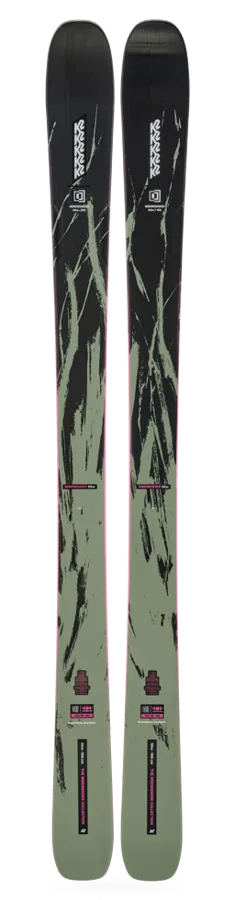
Altering Perceptions with Weight
Normally ski brands are looking for options to ditch weight, but K2 is following mountain bikers and race car drivers by adding small pods of weight in specific locations to reduce vibration. In K2’s case it’s called Darkmatter and is on their revamped Mindbender ski series. The weights are 30g TPU pucks placed where the tip and tail rockers begin, which varies with the width and length of the ski. The 60-percent reduction in vibration amplitude translates to better edge grip, more control and precision and less deflection, according to K2. The addition of Darkmatter allowed the company to cut the amount of metal in each ski and use lighter woods, reducing overall weight by about 10 percent. The new tech is in all the Mindbender skis, which range from 88mm to 111mm.
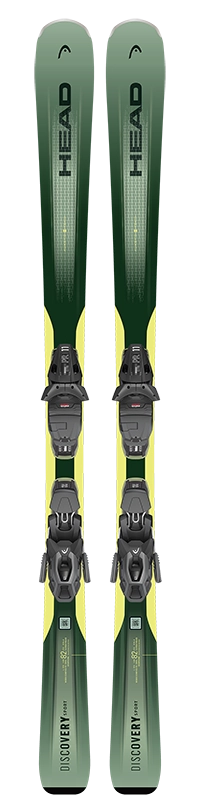
The Counterintuitive Discovery
Head’s Discovery family doesn’t make sense, starting with the behaviour of a new head-scratching material it is pioneering in skis. To a wood and graphene core, Head added an auxetic material. When the ski is flexed in a turn, instead of getting longer and thinner as expected, the auxetic material compresses and hardens. That means it is soft and easy when the ski is bent gently—perfect for mellow turning and slower speeds—and then becomes stiffer and damper as speed and force increase—perfect for more demanding conditions and higher speeds. To increase rigidity, Head added a superframe, a fibreglass envelope that wraps the core. The third big innovation is the plate beneath the Protector EVO binding. It maintains a consistent ramp angle no matter the boot size (the nature of most binding adjustment means shorter boots have more angle and longer ones have less). Put it all together and the Discovery skis, ranging from 70 to 86mm underfoot, promise both race-ski carving and all-mountain agility.
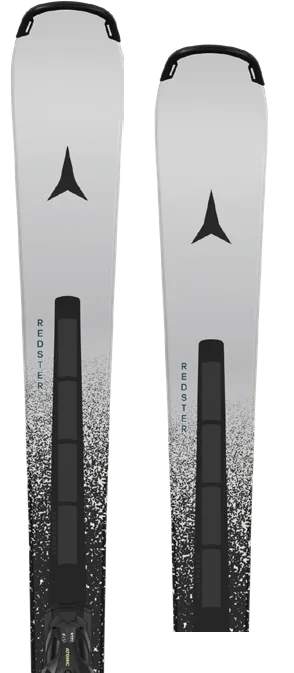
All-Mountain Race Skis
To bring the ruby Atomic Redsters, so common on World Cup podiums, to runs that aren’t bulletproof, Atomic created the Redster Q and Cloud Q. The men’s and women’s skis take technology honed on the race course and shape it for diverse conditions. There’s plenty of metal and carbon in the construction, but the key feature is Revoshock, Atomic’s name for their steel or carbon plates wrapped in an elastomer. Placed on the front of the ski, they smooth out vibrations to add control and provide a spring into the next turn, particularly at higher speeds. For Atomic fans looking for a powerful companion for groomer days out West or all-mountain skis in the East, this is a welcome addition to the family.

From Sea to Summit
The intention behind the Scott SEA acronym is Ski Everything Anytime. The first design iteration lived up to the title and now Scott has expanded and tweaked it to be even more versatile—no matter the conditions. The SEA 2.0 includes a new width, construction changes and the addition of the 85mm width to the existing 98 and 108 models. The core is a sandwich of poplar with Titanal inserts and full sidewalls, though the bottom side of the wood is milled out to lighten the skis without losing too much pop. The edge at the tip is bevelled, which improves float and agility. The slightly twintipped skis range from an all-mountain tool in the 85 to a freeride stomper in the 108.

A Montero for Everyone
Stöckli’s Swiss-crafted, handmade, high-end, all-mountain Montero skis are perennial favourites at our ski tests. To capitalize on their popularity Stöckli has diversified the line with some softer construction techniques. Not all their fans loved the shift, so Stöckli responded with more performance. One of the secrets to the Montero’s versatility is Flex Control Technology, an S-shaped cut in the aluminum laminate that makes the skis softer at the tip and tail, and thus easier to engage and release at slower speeds, but when there’s more force applied to the skis, at higher speeds or during more powerful carving, the S-cut locks together, stiffening the ski torsionally. To add a touch more stiffness in the AX and AR models, Stöckli moved the S-cut from the top aluminum layer in the sandwich construction to the bottom. And for those that want even more power, Stöckli is introducing the new Montero AR Pro, which has a sexy aluminum topsheet and race ski features.
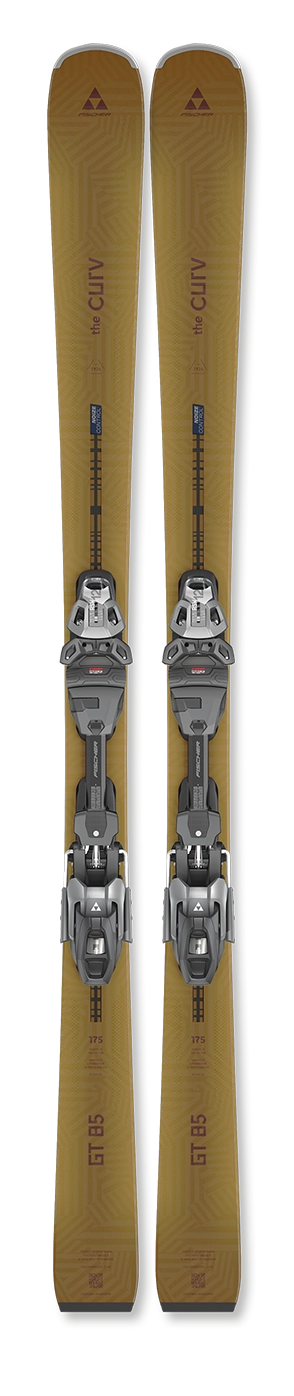
The Curviest Ski on the Rack
The Curv was already a shapely carver that achieved the charge-ability of a race ski and the approachability of an all-mountain ski. For this third generation, Fischer refined the build and shape. There’s Noize Control, a matrix of metal pigment on the top of the ski that absorbs vibration to smooth out the feel and improve edge hold. Add to that a complex inner structure: wood, two sheets of Titanal and two layers of carbon for more torsional rigidity and rebound. An aggressive sidecut hides a shorter radius at the tip and tail and a longer one under the foot. The Curv family is diverse, but all share moderate waist widths and a desire to carve sweet, smooth arcs.

New All-Terrain Ski
Ski Fels has 13 unique models of ski, but only one optimized for doing it all. Based in Invermere, B.C., the boutique ski maker added four new models to its roster last year, including the all-terrain, all-conditions Attitude Carbon Rock. Chris Fels, the owner and head designer, gave it a unique geometry, but only in one length, like all the company’s models. The Attitude Carbon Rock is 172cm long and 89mm at the waist with a full carbon fibre construction and tip and tail rocker carefully matched to Fels’ unique sidecut shape. “It carves nice lines without losing speed at all,” he says. “I can manoeuvre this same ski in bumps, crud and powder as if I was years younger.” The price is $1,400, but, really, what’s money when it comes to feeling young again?
Boots
This year’s boot bounty includes upgrades to favourite lines, outer shells with holes in them and asymmetric pivot points. We tested them to help you decide how to put your best foot forward.
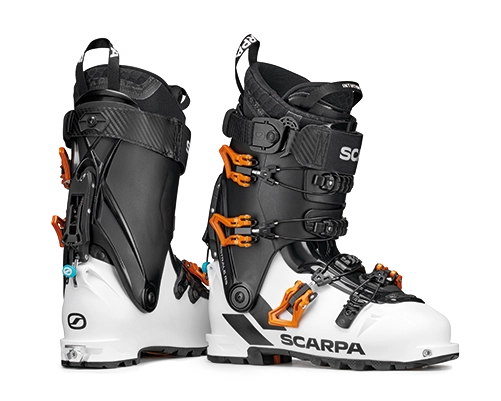
The Classic, Refined
The identical men’s and women’s Maestrale and Gea comprise Scarpa’s most popular alpine touring boot line because they nicely thread the needle between downhill capability and uphill efficiency. This winter Scarpa adds extra downhill performance with the addition of the Maestrale RS and Gea RS. The RS versions have an additional buckle, with two wire-style ones on the upper shell and two on the lower shell, in addition to a powerstrap. Scarpa also upgraded the upper shell to make it feel more powerful and stiffened the tongue of the heat-mouldable Intuition liner. The men’s version is a 130 flex, while the 125 flex Gea RS is one of the stiffest women’s touring boots available. During testing, the Maestrale RS proved to have a smooth and powerful feel that easily drove big skis in tricky snow conditions and kept up to race carvers at the resort. Heading uphill, the large walk-ski lever was easy to find by feel with gloves on and it provides ample 61 degrees of movement. The Vibram Cayman LT sole gave us confidence scrambling up hard snow and scree. The other nice upgrade: a wool felt liner that ups the warmth and will help maintain this boot’s deserved reputation.
$999 · scarpa.com
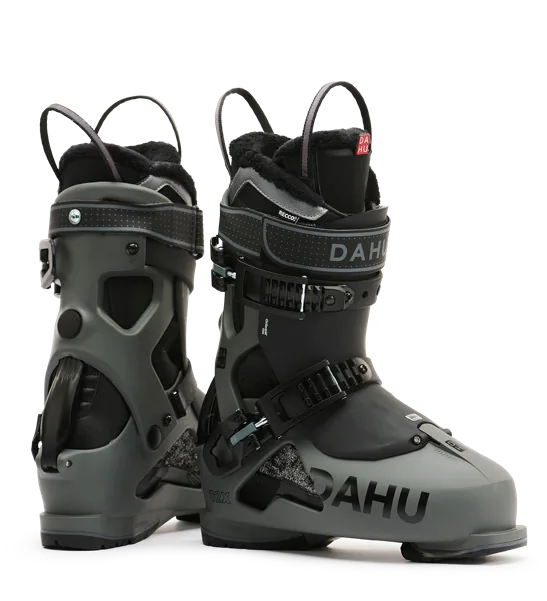
The Al Fresco Ski Boot
Many things separate a Dahu boot from most other ski boots. But after skiing in them a few times the thing that stands out is the easy entry. The front and back of the 02AM’s three-part shell hinge almost to the ground, opening the boot right up, which makes putting on and taking off the boot as easy as doing so for a pair of shoes. The more immediately obvious difference is that big chunks of the outer shell are missing. This is more a comfort than a performance consideration. Many modern ski boots mix softer and harder plastics and the concept here takes it even further. The exo-skeleton represents the places where structure is needed to transfer control to the ski, while the cut outs are where feet often need more freedom. What makes this al fresco concept possible is the liner. It’s a waterproof boot, lined with 200g of Primaloft synthetic insulation. A rugged sole means they can double as a winter boot off the slopes, too. All that’s cool but what surprised us the most about the 02AM is that it skied better than we expected. This is not a charge-down-a-backbowl or GS race boot. But if we skied at moderate speeds we were never left wanting for more stability or stiffness. And boy were our feet happy at the end of the day.
$1,300 · skidahu.com

Pros Without Cons
The Nordica Promachine was already a favourite of high-performance ski boot enthusiasts before Nordica decided to tinker with it. To make sure not to ruin an already good thing, Nordica surveyed fans. They told them to keep the four-buckle and powerstrap design, the customizable and warm cork liners, and the 98mm low-volume last. That left Nordica with room to add a little more room in the instep, a stiffer frame to increase lateral stiffness and a smoother-flexing spine. The Promachine comes in four models, the 130 S and 120 for men and the 115 W and 95 W for women. We tested the 130 S. It is easier to get into than most of the low-volume boots we’ve tried, but once buckled still has a snug fit in the heel and mid-foot and decent room in the toe box. The new frame allowed Nordica to eliminate some materials, which helped cut weight. The boot is noticeably light compared to most high-performance boots. But what stood out for us is the smooth flex. The Promachine feels super-responsive, but not in a twitchy or beat-up-the-shins kind of way. It’s like driving a high end car: quiet, smooth and ready to charge.
From $600 · nordica.com
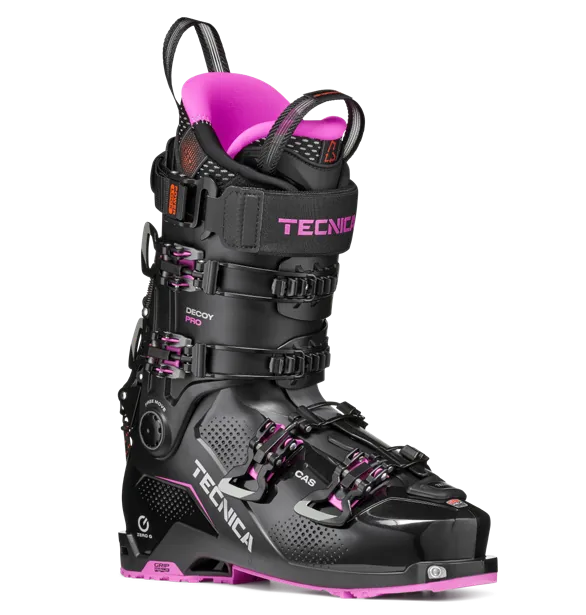
Tecnica Zero G Decoy
The Zero G Decoy is representative of a new class of ski boots kicking their way into the gap between models dedicated to touring, like Tecnica’s 1,200g (per boot) Zero G Tour, and resort boots with a walk mode, like their 1,800g Cochise. The Decoy has the same range of motion as the Tour and the same Gripwalk sole and stiff polyurethane shell as the Cochise. Weight-wise, it lands right in between at 1,650g for the Pro model. Compromise comes at a price that starts at $900, hundreds of dollars more than the other two boots. Still it’s tempting for anyone looking for a powerful boot for skiing challenging conditions and big days in the backcountry.
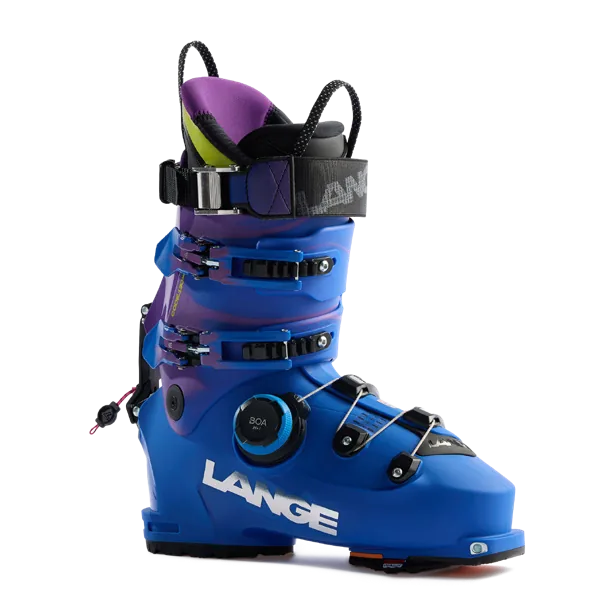
Lange Code
For any skier looking for a touring-capable boot that won’t sacrifice performance, Lange just set the standard with the Code. The all-new design has a BOA dial instead of buckles on the lower shell. An Active Blade spoiler in the spine extends leverage and power transmission, and an elastomer insert in the ski-walk lever smooths out the flex. The boot comes in flexes up to 140, as stiff as we’ve seen in a touring-capable boot. It also comes in two last widths, 97 and 100mm, for dialing in the right fit.
From $650 · dynastar-lange.com
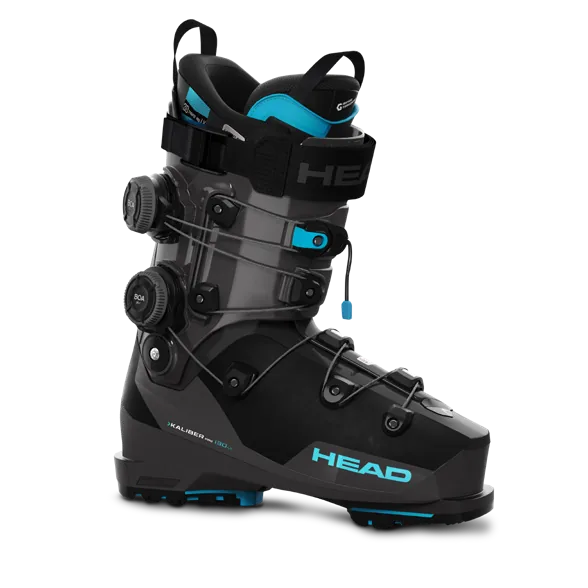
Head Kaliber Pro LV
The BOA dial promises a more precise fit adjustment, but skeptics worry they’ll catch the lower boot’s protuberance when they’re carving really hard. The Head Kaliber Pro LV soothes these (perhaps wishful) concerns. It’s a double BOA boot, but Head moved the lower dial, which typically resides below the ankle hinge, to the upper cuff, where it is safely out of the way of even the deepest of hip drops. The high-end boot is loaded with other features to take full advantage of the double BOA. On the fit side there’s a 98mm last, a better quality liner, softer plastic in key fit locations, and the LiquidFit customization system. On the precision skiing file, the boot has an exoskeleton of stiffer plastics designed to transfer energy more efficiently from the skier to the ski.
From $700 · head.com
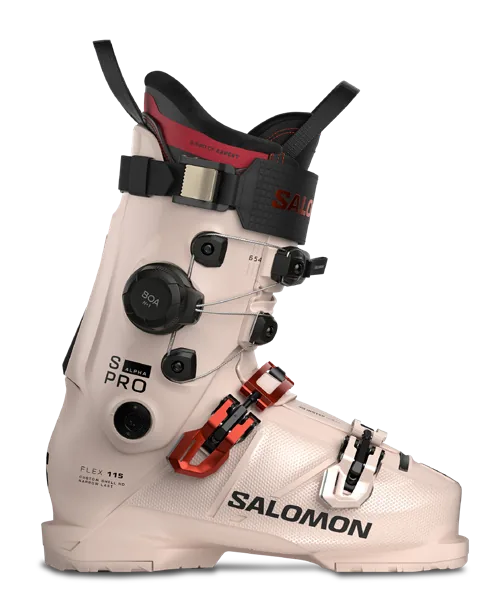
Salomon S/Pro Alpha C
Salomon is blurring the lines between two- and three-piece ski boot designs with the S/Pro Alpha C BOA boots. On the inside of the foot the upper shell extends almost to the boot sole, rather than stopping at an ankle-height pivot point. The attachment between upper and lower cuff remains at the ankle on the other side of the boot. Salomon says this asymmetric design creates a lower pivot point and better leverage and power transfer. That mates well with the low-volume last and high-end materials. There’s a BOA dial on the upper shell and regular buckles on the lower boot, a wide powerstrap, a heat mouldable liner and the TPU shell is mouldable, as well. The Alpha C BOA comes in women’s and men’s lasts through a range of stiffness.
From $650 · salomon.com
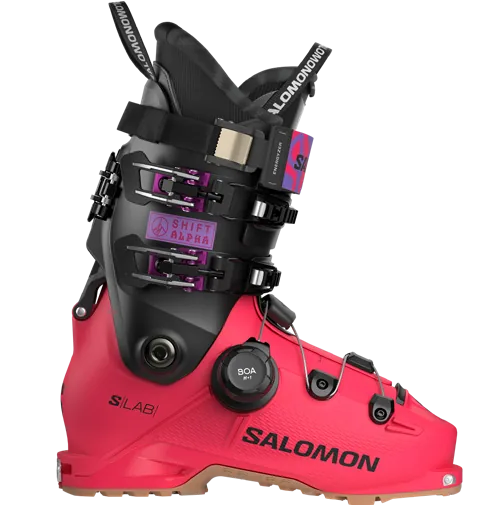
Salomon S/Lab Shift Alpha S BOA 140
What gives the Shift Alpha S BOA the race-grade S/LAB label? Designers added an extra-stiff plastic insert, reinforcing the lower shell overlap to provide stronger flex. The 140 also uses a stiffer material for the cuff. The Freespine that ensures direct energy transfer between cuff and shell combines with the Exobelt and BOA lower boot to provide micro-adjustable foothold. It’s a fit system that is repeated in similar fashion across the entire Shift Boa line. The hype around the SkiWalk system is always about booting back up for another hit or for efficient backcountry missions. Let’s not overlook how sweet it is on the walk out to the car.
$1,149 · salomon.com
Made Here

Grass Sticks — Made in Revelstoke
Across the Columbia River from downtown Revelstoke, J.J. Vinet is extolling the virtues of bamboo while surrounded by hundreds of stalks of the tree-like grass. He’s not in a forest, he’s in a workshop, where bundles of bamboo line three walls, soon to be cut to length and made into ski poles. The poles evoke a vintage aesthetic but are also forward-looking, to a warming future where products of all types will need to be more sustainable. Vinet says the stalks are shipped from India, but the fact that they are grown instead of taking shape in a smelter and foundry means they create fewer emissions than aluminum poles, and are ultimately biodegradable, as opposed to carbon fibre poles which are future landfill. But how do they perform? As a former competitor on the Freeride World Tour, Vinet expects as much from his equipment as anyone, and has been happily swinging bamboo for five seasons, even before he set up Grass Sticks’ Canadian shop. The company formed in 2015 in Colorado, but owner Andrew Beckler says it didn’t make sense to ship the awkwardly shaped packages across the border, so he set up a new Canadian company and hired Vinet to make poles that are as strong as steel, compare to aluminum in weight (510g per pair), and will flex harmlessly way beyond the breaking point of carbon fibre.
$169–$192 · grasssticks.ca
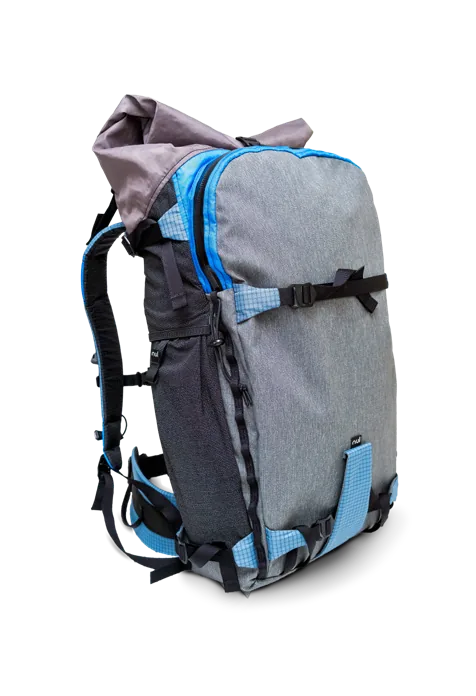
Dreamline Ski Pack — Made in Nelson
By Matthew Channer
Handmade in Canada with sustainable materials, the Dreamline ski pack from boutique gear maker Northern Ultralight is everything a thinking backcountry skier could ask for. A decade ago, founder Scott Matson took his own prototype backpack design hiking on the Continental Divide Trail. That’s where he decided he wanted to design and build packs for Canadians doing what he loves to do. Calling on his civil engineering background and field-testing everything himself, Matson launched Northern Ultralight in 2018. As Matson became more interested in ski-touring he saw the need for a Canadian-built ski pack that wouldn’t let users down in the backcountry. The result is the Dreamline, a robust, versatile pack meticulously designed and then tested by local backcountry skiers and experienced guides. Stand-out features include the compact avalanche compartment with shovel sleeve for quick access in an emergency, lightweight aluminum hardware, a host of external attachment points and snow-proof pockets. Best of all, each Dreamline is hand-crafted in Northern Ultralight’s workshop just uphill from downtown Nelson, B.C. Containing only recycled and eco-friendly non-toxic materials, it’s the pack for Canadians who care about where their gear comes from.
$636 · northernultralight.com
Bindings
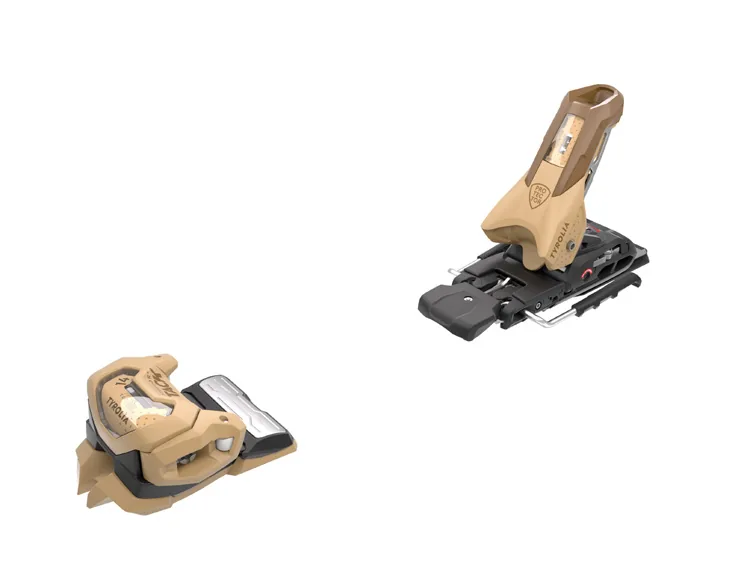
Tyrolia Protector+ Attack
A new issue of the Protector+ Attack binding offers a (slightly) lower stand height of 21mm, easier step-in entry for soft snow and higher DIN settings (14 and 16), but the notable feature of this Tyrolia/Head innovation remains the laterally-releasing heel piece. Toe pieces are great at releasing horizontally. Heel pieces pop vertically, leaving your precious ACL very vulnerable to backward twisting falls. The Protector+ Attack heel piece addresses this directly. It has three DIN settings, one for the toe piece, one vertical heel DIN setting and a third one that controls the resistance the binding offers before releasing the heel to either side. The heel allows 7mm of elastic travel before the release mechanism kicks in, so premature releases are not a problem, at least not as big a problem as a torn ACL would be.
$399–$419 · tyrolia.com
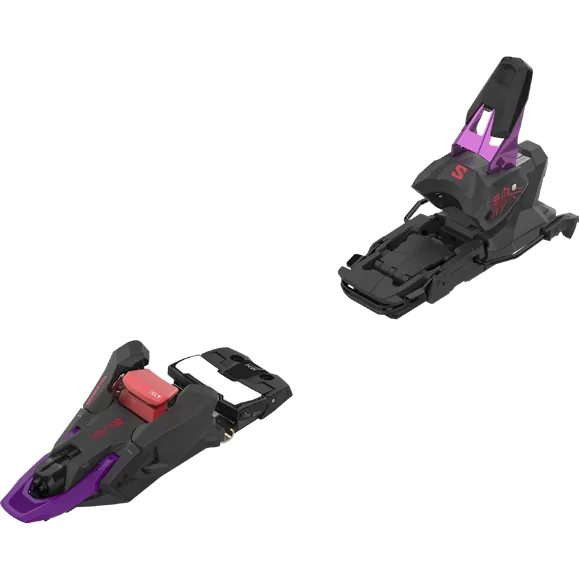
Salomon S/Lab Shift2 16 MultiNorm
When Salomon released the original Shift binding in 2018 it was a watershed: downhill skiability with respectable uphill performance. The Shift became the go-to binding for resort skiers with dreams of venturing into the slack- or backcountry without a completely different set up. The Shift2 is available in 16, 13 or 10 max DIN ratings with all three models getting the new Power Block ADF, a new micrometric, height-adjustable toe anti-friction device with a single-block aluminum insert that Salomon says provides 30 percent more lateral stiffness, and additional durability, compared to previous generations. The Shift2 16 MN also gets a three-piece reinforced heel using super-rigid steel.
$849 · salomon.com
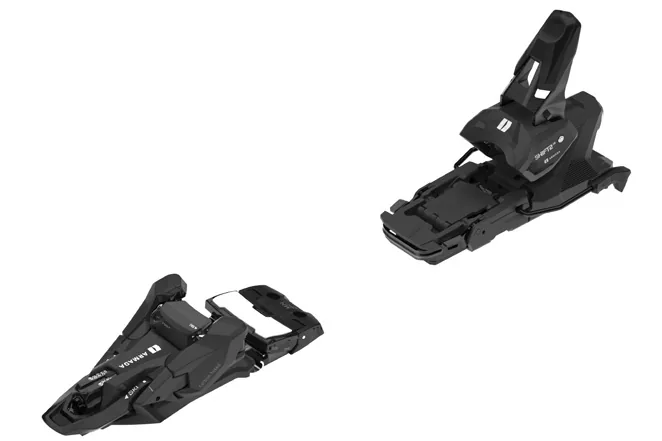
Armada N Shift² DIN 16
To the popular N Shift² series, Armada adds a new, higher DIN model. With the same heel design as the Strive alpine bindings and a DIN setting range from 8–16 this binding is well equipped for its freeride calling, but the long wings of the adaptable toepiece pull back to reveal tech points for efficient touring. What separates the 16 from older models isn’t just a higher release range, but more metal parts and a corresponding increase in weight (from 1,770g per pair for the DIN 13 model to 2,420g per pair for the 16). The bindings have a wide (60mm) toe pedal, low stand height and are compatible with GripWalk boot soles.
$849 · armadaskis.com
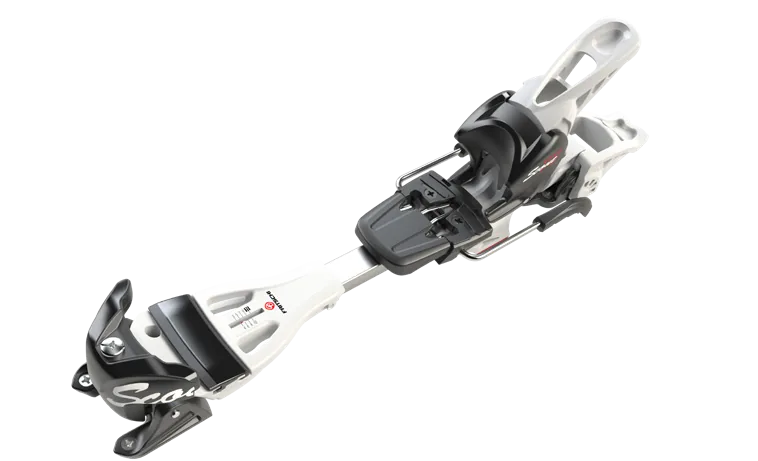
Fritschi
Albert Fritschi started making alpine ski bindings in Switzerland in 1960 but it was sons Andreas and Christian who kick-turned the company toward ski-touring in 1980. They grabbed attention in 1995 with the benchmark-setting Diamir Titanal, and six years later, with the Diamir Freeride. Both solid-frame bindings accommodated an alpine boot and introduced many to the wonders of ski-touring. Today, Fritschi’s four-model lineup is broad-reaching, and starts with the new, 290g Xenic Plus tech binding. It has a rotating, releasing heel and a toepiece that uses elastic, horizontally shifting pin levers to prevent premature releases. At the other end of the line up is the meatier, 790g Scout, that’s equally at home alpine skiing or alpine touring. In-between siblings, the Vipec Evo and Tecton (500g and 550g), appeal to the performance touring and freeride crowd on fatter skis. Maximum DIN settings range from 10 to 13, and offer reliable releases in any situation—including a forward fall, or climbing emergencies.
$689–$829 · fritschi.swiss
Goggles
Remember when goggles sucked? Every year, tinkering designers get better at devising lens swapping mechanisms, while even smarter ones focus on creating lenses that adapt to light levels and don’t need to be swapped out at all.

Bollé Blackridge
Seeking to set the standard for adaptive lens technology, Bollé has introduced the Phantom 0-4 lens. It adjusts through light categories zero through four (night park riding to sunny glacier travel) with most of the effect achieved within 20 seconds of a change in environment. While previous attempts at adaptive lenses have lost sensitivity in colder temperature, Bollé claims effectiveness down to -25°C and we saw no reason to dispute it. With no need for a lens swapping mechanism, the large lens achieves a frameless look in the Blackridge frame, with parallel gains in field of view. Plenty of venting up top reduces fogging of the double-layer lens. Contoured face foam is comfortable and the frame is made from 55 percent recycled material.
$160 with the SLF lens to $250 with the semi-polarized Phantom+ (pictured) · bolle.com
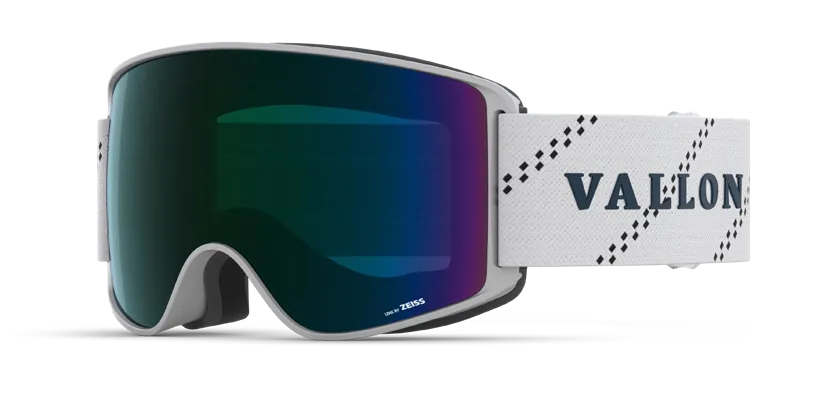
Vallon Crossroads
The toric lens of the Crossroads blends a cylindrical curve with a hint of spherical shape, resulting in a natural view with minimal distortion. It comes with two lenses that cover light conditions for categories one through four (up to 72 percent light transmission). To swap between the two, disengage a robust slider mechanism and warp the frames slightly to release the magnets that help keep the lens in place. Two silicone strips on the 50mm strap keep the goggles secure on helmets. The lens is the product of a Vallon partnership with Zeiss and has an effective Mazzuchelli anti-fog inner lens coating.
$299 · vallon.com
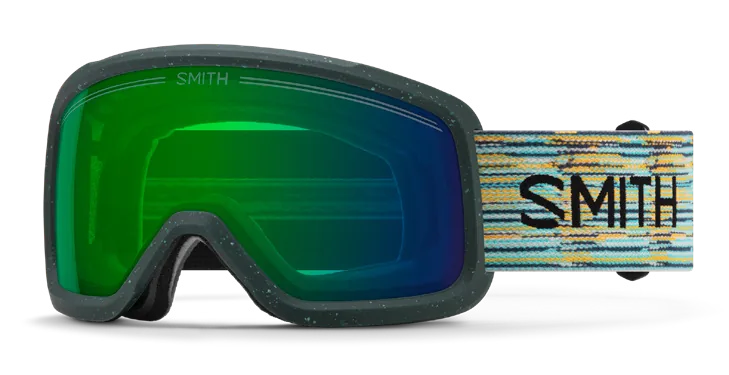
Smith Shakedown
You know goggles look good when you get compliments from two strangers and one teenage daughter. Other reasons to be down with the lower-profile, freestyle-leaning Shakedowns include: the vertical and horizontal curve for a wider field of view and optical clarity; a wide strap with two anti-slip silicon strips; and an under-the-helmet fit, if that’s your jam. The Emerald ReNU Upcycle Scrap colour, shown here, is packaged with Smith’s ChromaPop Everyday Green Mirror and a clear lens. Our favourite, the low-light yellow, is available in five other Shakedown styles.
$200 · smithoptics.com
Outerwear
These fortress-grade garments are out to make weather forecasts as necessary as pay phones.

Mammut Men’s Sender IN
With the Sender IN, Mammut kept it simple, creating a durable, no nonsense insulating layer that’s free of drawstrings and Velcro but long on utility. The insulation is baffled in an offset grid pattern that minimizes cold spots while keeping construction from getting too complicated. The hood is sized for a head, not a helmet and Mammut’s LOOP insulation is made entirely from recycled rope.
$329 · mammut.com
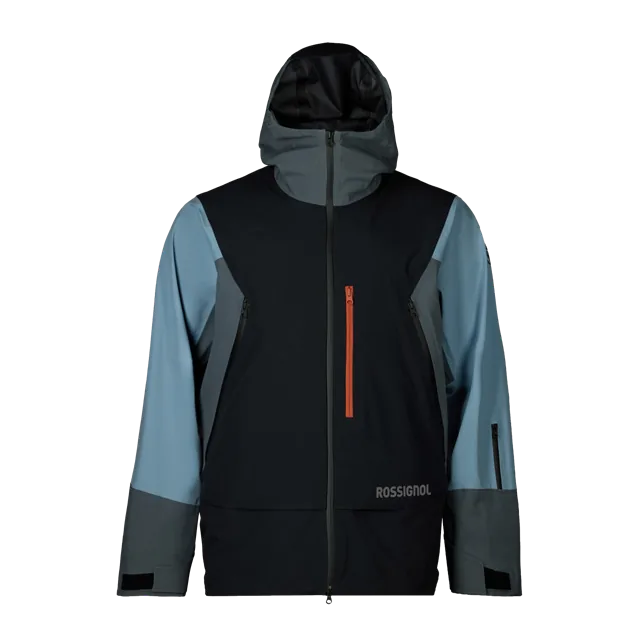
Rossignol Proclivity Kit
The best way to design a stellar new jacket and pants combo is to ask the people who get after it every day for input. For its new Proclivity 3L shell and bibs kit Rossignol turned to its freeride athletes, including Whistler local and Freeride World Tour champ Marcus Goguen. The result is a stretchy and adjustable combo that kept us dry and mobile no matter the conditions. We could dial in the slightly baggy fit on the bibs with a waist cinch and adjustable suspenders, while the jacket provided plenty of room for layering without feeling cavernous in warmer conditions. Long pit zips on the jacket and inner and outer thigh vents on the bibs were handy on bootpacks and warmer days. Pockets galore on both pieces allowed us to forgo a pack. And when the weather got snotty we could hunker down under the large hood, high collar and waterproof fabric. Of course, with input from the most progressive athletes, the Proclivity’s colour-blocking-style looks pretty sharp too.
Jacket $750, bibs $600 · rossignol.com
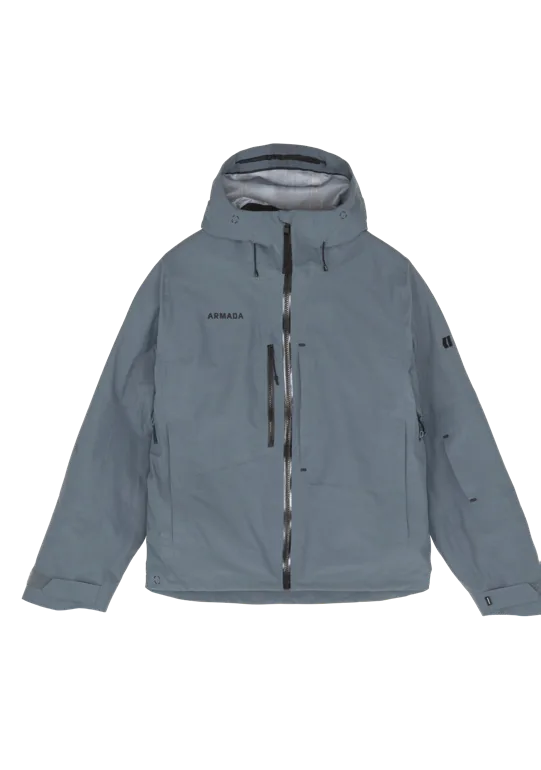
Armada Luminal 3L Jacket and Bibs
The women’s Luminal kit keeps up Armada’s freestyle cred. It’s a high-performance three-layer combo with all the bells and whistles. Adjustable hood, hem and cuffs. Snuggly microfleece chin guard. Vents for the pits and inner legs. More than enough pockets to lose a phone in: two on the chest, two on the belly and two on the upper bibs. After extensive testing on Revelstoke’s annual but unofficial Gnar Day it was proven that six 355ml cans will fit undetected in the bibs alone, thanks to Armada’s slightly looser-than-industry-norm fit. Men with similar style instincts will want to check out the corresponding Furtherance model.
Jacket $629, bibs $529 · armada.com
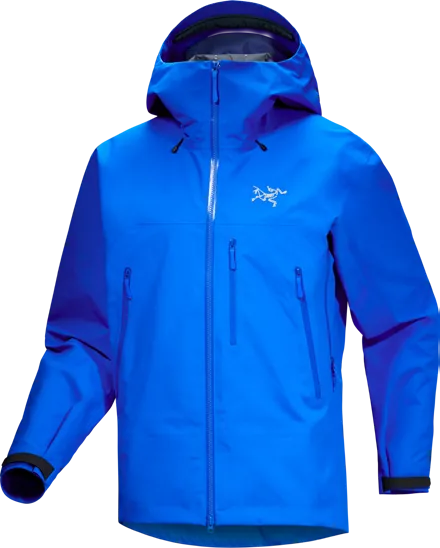
Arc’teryx Beta SV Jacket
Cut a little longer than the fashion-forward Beta AR (see Trends above) the newly reintroduced Beta SV shell puts a premium on protection from wind, precipitation and powdery crashes. That’s not to say that it’s anything short of a handsome garment. The large, collarless hood has a three-way adjustment but the cinches are concealed and the exterior pockets aren’t oversized. The wide-opening pit zips and weatherproof two-way front zipper burnish the backcountry bonafides. Inside are a mesh stash pocket and a zippered chest pocket. The PFAS-free Gore-Tex ePE fabric has a micro-grid backing material for durability and abrasion resistance at next to no cost to weight or suppleness.
$1,000 · arcteryx.com

Arc’teryx Incendia Pants
A mostly minimalist design leaves the Arc’teryx Incendia, in essence, topline material cut in style. Two zippers on the thigh pockets are hidden by discreet flaps. Inside both thigh pockets are transceiver sleeves and loop attachment points. There are no belt loops or Velcro waist tighteners, just a largely hidden belt. Two-way zippers provide maximum flexibility for the outside thigh vents. At boot level, a one-handed cinch closure will pull the cuffs tight around your boot for a powderproof seal even before the cuff comes into play.
$850 · arcteryx.com
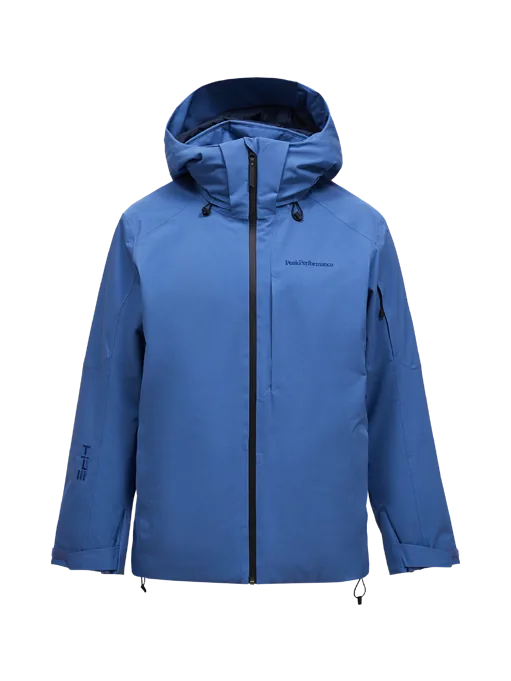
Peak Performance Maroon Jacket & Alpine Pants
You don’t see many one-piece suits on the slopes these days. That may come down to concerns about style or practicality. Peak Performance has a solution for both. Its Maroon Insulated Jacket and the three-ply Gore-Tex Alpine Shell Pants do more than match colours. The jacket’s powder skirt has four attachment points that pair with loops or domes on the pants, creating a de facto onesie that retains the versatility and look of your typical two-piece combo. More than just a conceptual melding, the pair is feature-filled: removable, insulated hood; sleek inner wrist cuffs; inner and outer chest pockets; four zippered pants pockets; generous outer thigh vents. The jacket’s side vents are modest, but they open along the lower rib cage instead of in the arm pit, making them easier to open and more likely to be used. Options for keeping your drawers from drooping abound, with a Velcro-adjustable waist band, belt loops and suspender attachment points.
Jacket: $450, pants: $800 · peakperformance.com
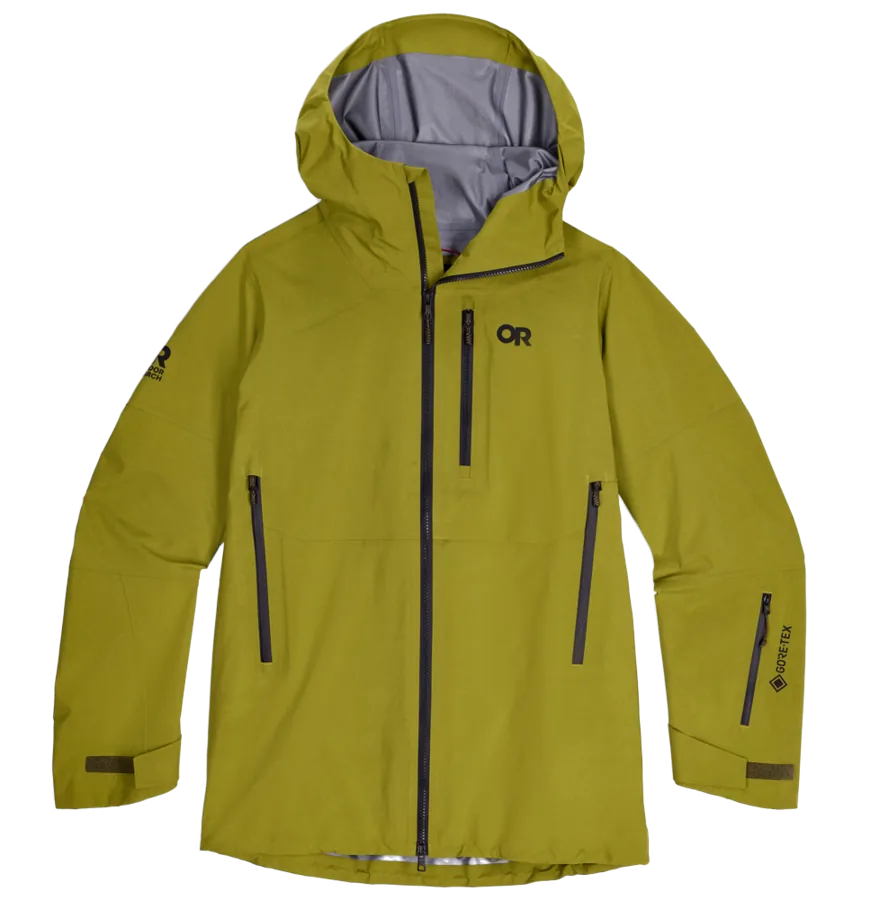
Outdoor Research Hemispheres Team Jacket
Constructed from the new enviro-approved bluesign® three-layer Gore-Tex material, this everyday ski jacket delivers reliable, waterproof/breathable performance. The zipped-up collar is just high enough to be warm but not too tall to fog goggles. The sleeves are long with simple cuffs that work as well over or under gloves. The Hemispheres is cut long in the body with an internal draw cord to hem it up, the way the kids do these days. The pit vents and pockets use YKK Aquaguard zippers. Best of all, the pass pocket is at wrist level, so you don’t have to do the Captain Jack Sparrow walk through the ticket gate.
$874 · outdoorresearch.com

7mesh Guardian Apex Jacket
The Guardian Apex is the kind of ski jacket we’d wear biking, or hiking. Or is it the biking jacket we’d take ski-touring? Doesn’t matter. This is a lightweight, PFAS-free, fully waterproof shell with the new Gore-Tex ePE membrane. The articulated fit and finish is top notch, with a range of refined features like the low-profile hook and loop cuffs. Wear the hood over a helmet or rolled down and snapped into the high-coverage collar. Need to shed a layer? The Guardian Apex stuffs smaller than a mini foam football into its own internal chest pocket with itty-bitty clips and lash points. We expect to see even more backcountry innovation out of Squamish as 7mesh continues to expand their established cycling catalogue into other alpine activities.
$750 · 7mesh.com
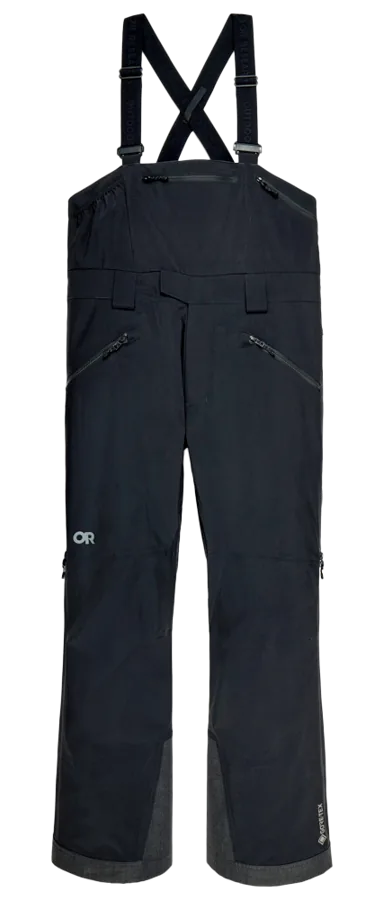
Outdoor Research Hemispheres Team Bibs
The latest entry in the bibs vs. pants debate argues that bibs are the bomb. Now in a burlier, three-layer Gore-tex material, the Hemispheres Team Bibs are less backcountry than previous versions (though there’s a new touring kit coming later in 2027). Why are bibs so awesome, even if you’re not in waist deep powder? All your top layers stay tucked in nicely. Wind never sneaks down your back. You get more pockets. These bibs have two-way YKK Aquaguard zippers for leg vents down your thigh to your knees. The number one feature is OR’s handy Swing Hatch for number twos. Down low, huge scuff patches reinforce against cuff edge wear.
$874 · outdoorresearch.com
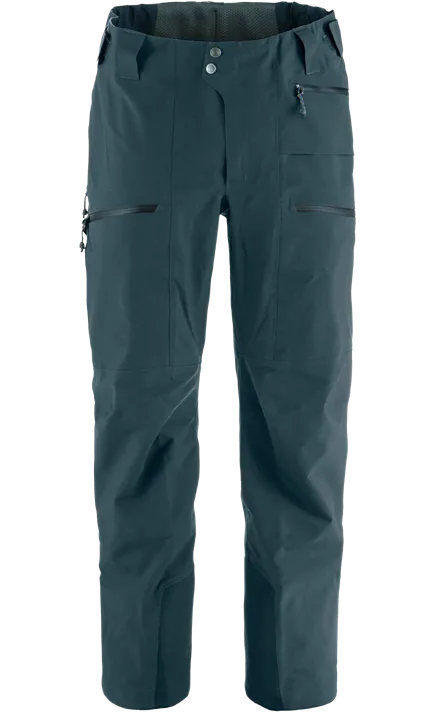
Fjällräven Bergtagen GTX Pro Trousers
The new Bergtagen touring collection from Fjällräven includes bibs and trousers, but after testing these we’d like to recommend to bibs devotees that they give their suspenders a sharp snap. No amount of loosening suspenders will make bibs as cool as pants when skinning. Temperature regulation is even easier thanks to two-way zippers that run from the cuff to the thigh, creating huge vents. There are two thigh pockets with phone or transceiver sleeves inside and a third, shallow pocket just under the belt loops for keys or cards. With two ways to tighten the lower leg material around the boot there will be ample ability to differentiate yourself from the balloon pant crowd in the parks. The Gore-Tex ePE membrane is waterproof, breathable and durable without being stiff.
$900 · fjallraven.com
Insulation
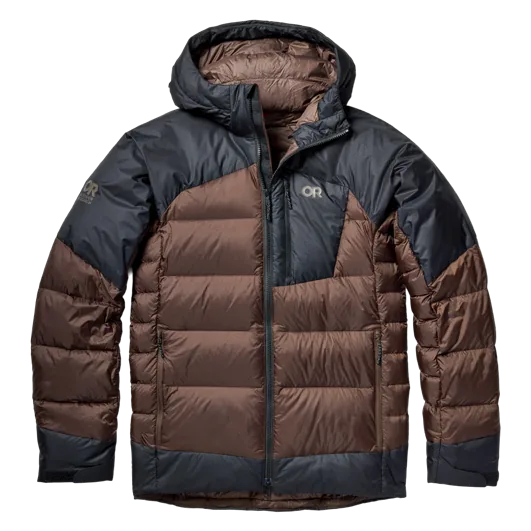
Outdoor Research Helium XT Down Hoodie
The Helium XT Down Hoodie is a definite upgrade to that classic ski town dinner jacket known as the puffy sweater. Outdoor Research mixes and matches fabrics for where you need more reinforcement and better waterproofing—like the hood, shoulder, waist and cuffs—and elsewhere they save weight with a windproof recycled ripstop nylon. Inside the hand pockets you’ll find a cozy brushed Tricot lining. The hood, waist and cuffs are adjustable for layering in cold climates and stormy alpine missions or blustery après lineups on Taco Tuesdays. Responsibly sourced 800+ fill down isn’t cheap these days, but dollar for dollar you’ll be hard-pressed to find another piece of gear you’ll wear as often as your Carhartts.
$574 · outdoorresearch.com
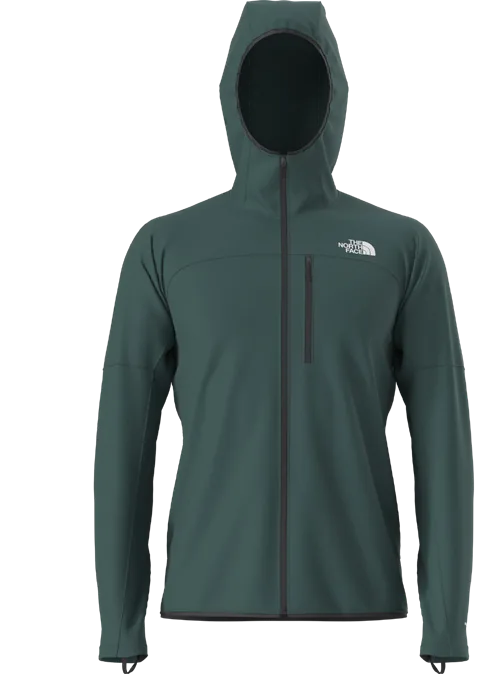
The North Face Summit Series Future Fleece
The waffle texture inside Future Fleece pieces is so deep it’s begging for a large dollop of whipped cream. The fabric gives the hoodie a reassuring thickness but leaves the garment very breathable. The lightweight polyester material is 50-percent recycled, quick-drying and wicks moisture well enough that it is well suited to wearing over a thin baselayer. Deploy the elasticized hood under a helmet for a snug option on cold or windy days. There are no belly pockets but a large exterior chest pocket zips for security.
$230 · thenorthface.com
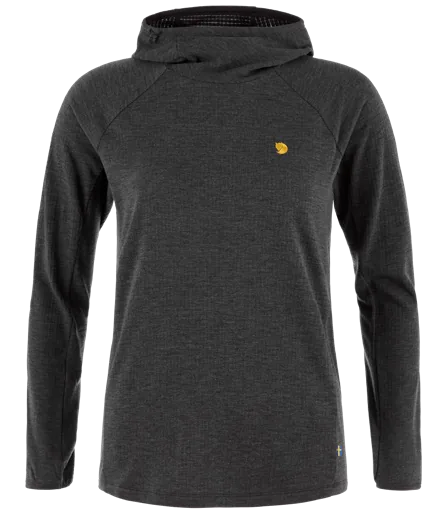
Fjällräven Bergtagen Midlayer Hoodie
Bergtagen is Swedish for “taken by the mountains,” and if that happens to you, you’ll be cozier with the hood of the new Bergtagen Midlayer pulled up and under a ski helmet. The hood’s opening is cut tight to keep out wind and snow. Tighten the cinch bungee to turn the hood into a neckwarmer when it’s not up around the head. The material, a mix of recycled material and moisture-wicking wool, takes the shape of a grid pattern inside which lends a subtle texture to the exterior. Also available as a half-zip.
$185 · fjallraven.com

Mammut Women’s Rime Light Hybrid
The Hybrid model gets its name from the panels of very stretchy fleece that run up each side of this jacket and down the underside of the arms. They serve to lessen bulk, increase mobility (and therefore comfort) and add a stylish accent to this thin puffy jacket. The rest of the fabric is treated with a PFC-free water-repellent treatment and filled with Mammut’s recycled LOOP insulation, which is spun from discarded climbing rope. The zippered inside chest pocket will hold a phone where it will stay warm and the two zippered belly pockets are large enough to serve as a stuff sack for the jacket when it’s not being worn, however unlikely that might be.
$349 · mammut.com

Icebreaker 300 RealFleece Descender
For fine-tuning a layering system, Icebreaker’s thin 300 RealFleece material is a mix of merino and lyocell, a soft and breathable, semi-synthetic material made with cellulose. Choose from the vest or long sleeve (LS) model. Both have light-gauge zippers for the full-front zippers and two hand pockets. There are stash pockets accessible from inside, but loading them up doesn’t feel quite right for this lithe design.
Men’s and women’s models: Vest $210, long sleeve $270 · icebreaker.com
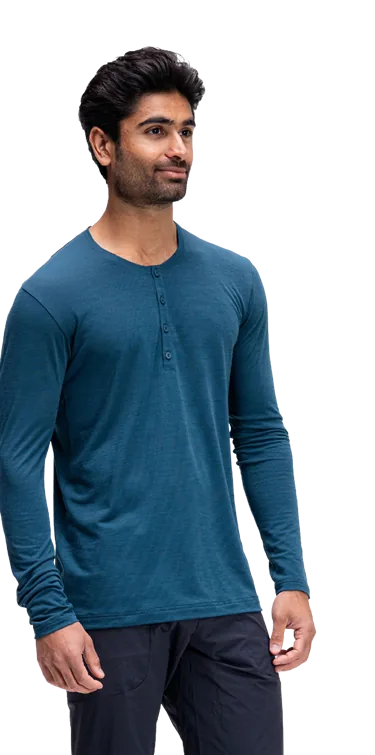
7mesh Desperado Henley and Short Sleeve
We found the Desperado Merino Long Sleeve Henley ($120) and Desperado Merino Short Sleeve Shirt ($100) in 7mesh’s gravel biking catalogue and loved them so much we kept wearing them all year long. Based in Squamish, 7mesh vibes more like a mountain adventure outdoor brand than any cycling apparel you’ve seen on the Tour de France. Wear these pieces individually, or one under the other, for breathable, temperature-regulating, and durable baselayers that deliver all-day comfort. Think merino-rich comfort with durable, polyester-blend performance. The stylish, four-button Henley will make it look less like you’ve stripped to your underwear at the bar.
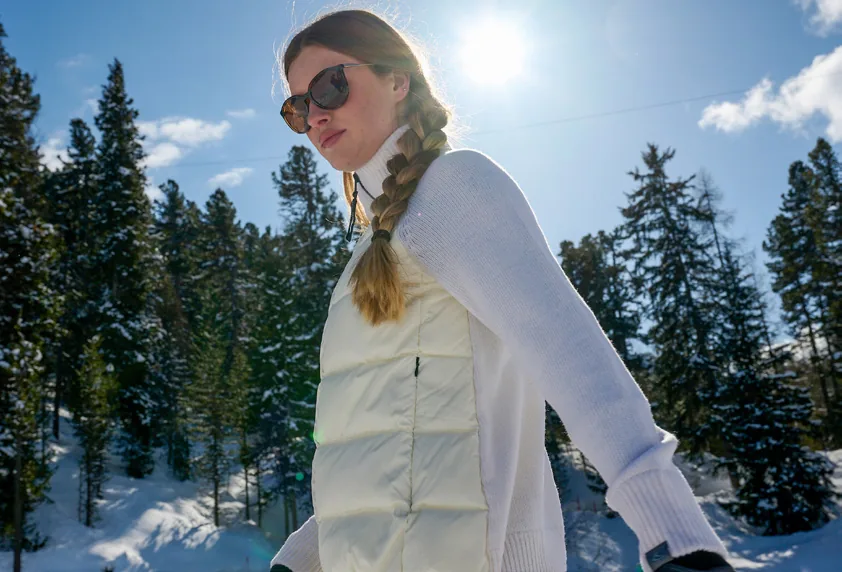
Capranea Noirmont and Acletta
Lux Swiss brand Capranea creates unique designs, fabrics, textures and colours that will help you make a statement on slope or in town. Everything from the premium brand is hand-tailored in Europe and each piece incorporates four-way stretch comfort plus cold and wet protection. From base- and mid-layers to full outerwear, the collection has you covered in opulent indulgence. The Men’s Noirmont knit mid-layer ($660) combines close knit merino wool sleeves with a quilted polyamide/elastane (nylon/spandex) insulated shell. For women, the highlight of the ultra cozy Acletta ($725) has to be the soft-touch, open-knit, merino-wrapped, goose-down-insulated collar. Both pieces are perfect for a fireside cocktail at St. Moritz’s five-star Badrutt’s Palace.
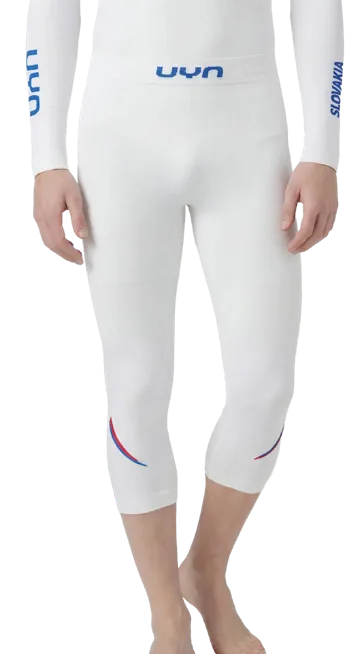
UYN Sports 3/4 Thermal Pants
Nobody outdoes the dreamily soft Natex (naturally aligned fibres and textiles), seamless body-mapping and targeted thermo-regulation found in UYN baselayers, designed and made in Asola, Italy. Black may be basic but we like the bold stripes and colours worn by national team skiers from across Europe. The men’s 3/4 Thermal Pants ($195) are built with Meta-Ribs on the quadriceps for pressure relief and stability, while your kibble and bits will appreciate the increased elasticity, support and structure. Just the right combo of polyamide, polypropylene and elastane work with a channelled inner surface to keep airflow moving during movement, while retaining body heat and wicking away moisture. Bellissimo!
Gloves

Swany Apex Pro
The new Apex Pro Mitt is Swany’s warmest human-heated handwear, but doesn’t feel bulky or awkward. Put that down to aerogel-infused insulation in which the liquid in the gel has been replaced by gas, making for insulation as light and warm as it sounds. The elasticized cinch strap rests on the inside of the wrist where it won’t mar the stylish appearance of the all-leather mitt. The luxuriously soft lining continues into individual finger channels to improve dexterity and comfort. Pull the elastic cord to tighten the mid-length leather cuff against a jacket sleeve and slide a hand through the removable wrist strap to keep loose mitts secure on the chairlift.
$230 · swanycanada.com
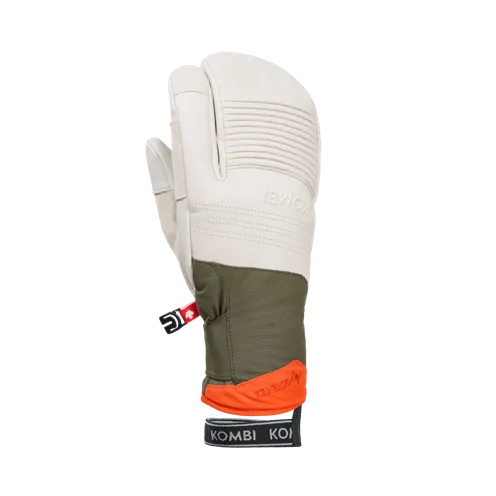
Kombi Canyon Short
Offering warmth that approaches that of a mitt and dexterity close to that of a glove, three-finger models are for those who know the value of a compromise. The three-finger model of the Canyon is available in a “short” model, meaning the pliable synthetic cuff won’t clash with your jacket sleeve or climb up halfway to your elbow. Meanwhile, the three-tone colour scheme and articulated knuckle padding creates a distinctive look. It belongs to Kombi’s warmest category, has a waterproof membrane and a blended merino/polyester lining for warmth and wicking action.
$159 · kombicanada.com
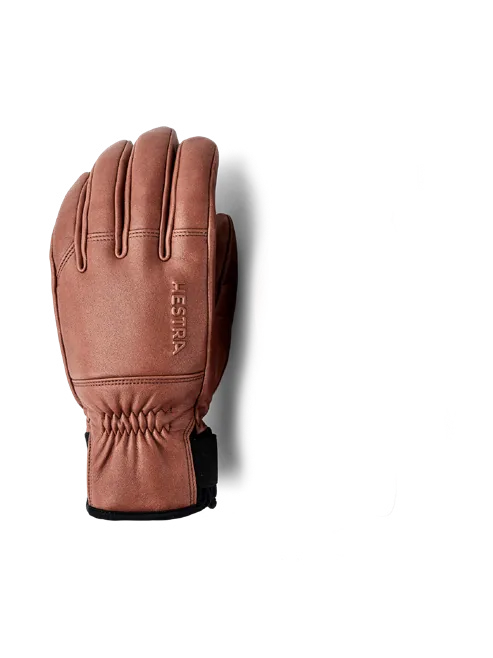
Hestra Omni
For anyone who thinks ski gloves tend to be overbuilt, the Hestra Omni offers a sense of restraint. Available in black, white, tan or brown, each option is solid in colour with no accents or embellishments, just minimalist stitching in pure cowhide (the white colour is goat leather). The inner portion of the cuff is neoprene and an elasticized Velcro strap will pull it tight to fit under a jacket sleeve. This is a glove you won’t have to struggle with to store in a jacket pocket, but it still comes with removable wrist straps.
$200 · hestragloves.ca
Other Bits
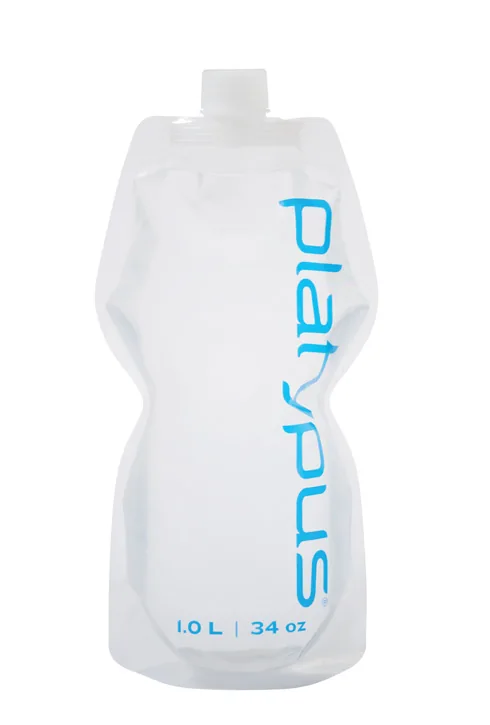
Platypus SoftBottle
With the price of ski passes these days, anything to keep you out on the slopes to max vertical is valuable and at $17 this collapsible water bottle from Platypus promises an excellent return on investment. Stay hydrated longer and save money on overpriced beverages by slipping it in your jacket pocket. It holds a litre and is free of BPA, BPS and phthalates. At 15cm wide it should fit in most interior jacket stash pockets.
$17 · cascadedesigns.com

Ortovox Focus Voice
There’s no substitute for avalanche rescue practice, but the next best thing is Ortovox’s newest transceiver. The Focus Voice is the most intuitive beacon we’ve used. With clear instructions right on the body and easy to manipulate buttons, a rookie we handed it to figured out how to turn it on and switch from send to search. Then things got even easier: along with visual directions on the large LCD screen, a voice (available in nine languages) led them right to the buried “victim.” The Focus also warned them when their phone was interfering and automatically adjusted for the digital disturbance. For experienced users it may seem excessive, but the Focus is also lightweight (185g), compact and comfortable to carry. Plus, when we have someone’s life in our hands, we’ll take any help we can get.
$550 · ortovox.com
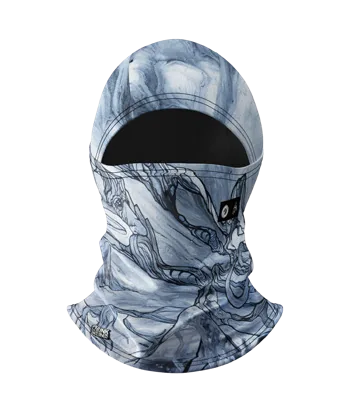
Phunkshun Wear Balaclavas
Sometimes the difference between cold or comfortable is a single, well-placed layer. Sometimes it’s two layers. Phunkshun Wear’s single-layer balaclava and neck tube models stretch four ways and have a soft lining that coddles the face. Their Double-Layer Balaclava has a water-repellent exterior but is still plenty breathable. Warmer still, the Thermal Balaclava offers a reassuringly thick layer of Polartec fleece as the inner layer for days when keeping your neck (and therefore body) warm is paramount. All balaclavas have thin skull material for helmet compatibility and are made with post-consumer recycled polyester, increasing the warm and fuzzy effect. Different designs feature artwork by California’s Chris Benchetler or Pemberton-based Kate Zessel.
Single balaclava (pictured) $42 · phunkshunwear.com
Smith Aleck Nunchucks
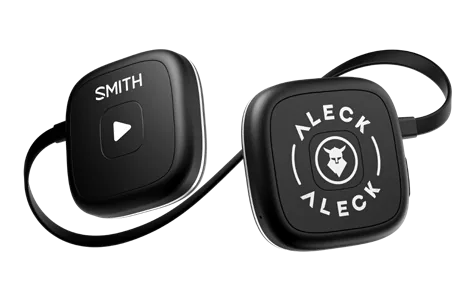
Nineties hip-hop in your helmet, like say Jurassic 5, is guaranteed to make any day better and the Aleck Nunchucks Bluetooth-enabled speakers make it convenient and safer. What’s golden? Unlike earbuds, you can hear Chali 2na’s deep, bass-baritone voice and the approaching screams of out-of-control boarders at the same time. Tap your ear pads to play and pause. Two taps for the next song, etc. These updated versions are USB-C with the plug on the left side—the same side as Smith helmet zippers for easy charging access. Smith helmet ear pads have pre-cut removable pieces of foam to fit the Nunchucks.
$200 · smithoptics.com

G3 Alpinist Universal Skins
G3, now doing R&D in the Kootenays, has developed a new Channel Bond glue featuring vertical channels that keep the skins from slipping sideways but, we found, never required any shoulder wrenching to free the skin from the ski during transitions. The Universal plush material rides the middle ground between the stickier Grip texture and the faster Glide and Speed options. Pick your pace and go. G3 Alpinist Universal Skins have articulating hands that grip most tips well and a camming clip at the back that won’t leave you dragging a tail. Available from 100mm to 145mm widths.
$217–$232 · genuineguidegear.com